Start with function
Transport tunnels carry people, vehicles, water, or goods. Defensive passages support movement within a fortified system. Mining galleries follow extraction seams and may change size as the resource changes. Urban passages can combine storage, drainage, service access, and circulation.
Function is often layered. A disused transport route may become a heritage path. A cellar may be incorporated into a later building. Interpretation should state which phase is being described.
Construction clues
Profile
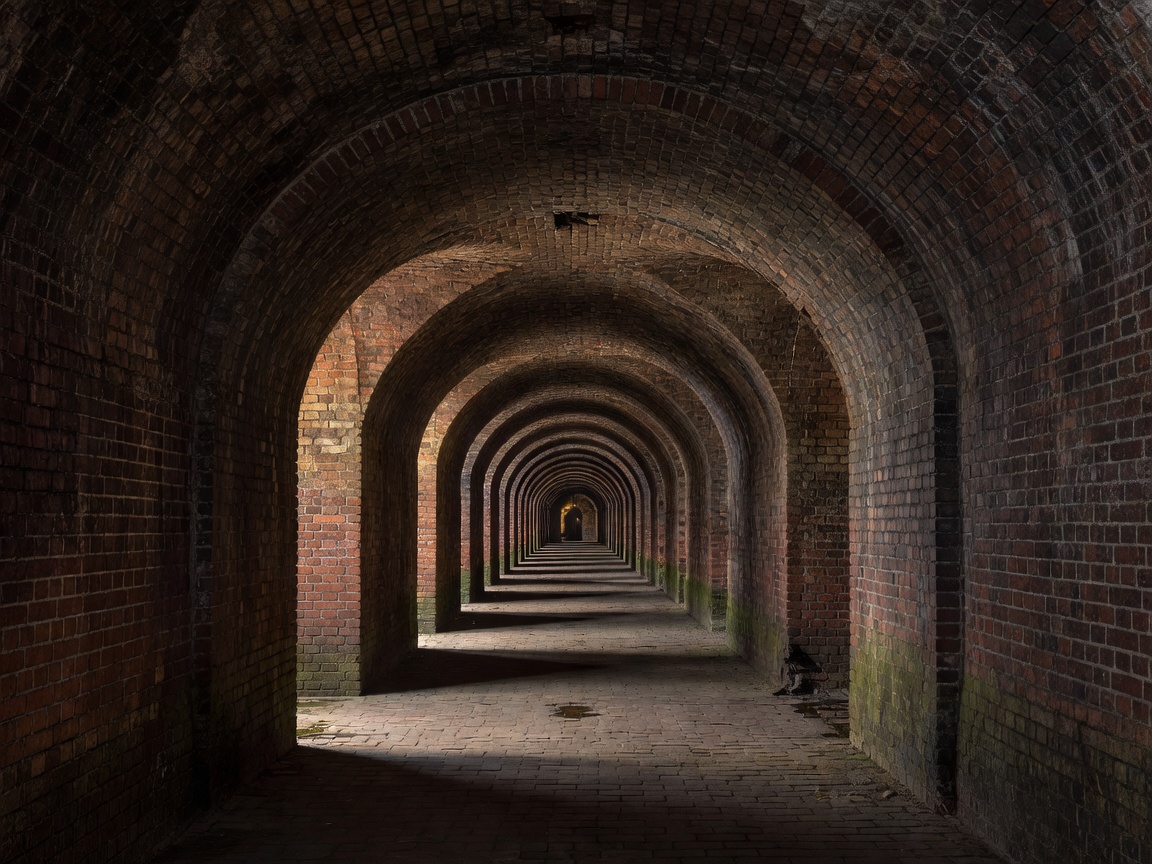
Rounded, pointed, or flat ceilings distribute loads differently and may reflect material, period, or local practice. A narrow profile can indicate pedestrian movement, drainage, or limited excavation capacity.
Lining
Unlined rock, brick, ashlar, concrete, and mixed repairs each carry evidence. Patchwork may show water ingress, structural maintenance, or adaptation rather than poor original workmanship.
Drainage and ventilation
Channels, sumps, shafts, grilles, and changes in floor level are functional systems. Never interfere with them. Modern visitor routes may use separate lighting and safety infrastructure.
Preservation and access
Moisture is a central conservation issue. Condensation, salts, biological growth, and repeated touching can damage masonry and finishes. Visitor capacity, barriers, lighting, and guided movement help limit wear.
Many historic tunnels are not open. A map, photograph, or archive record does not imply public access. Use the designated entrance, obey closures, and treat private or restricted routes as unavailable.
Comparison block
Good for
- Reading construction through visible details.
- Comparing original function with later reuse.
- Preparing questions for a guided interpretation.
What to know
Do not enter closed tunnels, abandoned workings, or unlit routes. Structural conditions can change without visible warning.