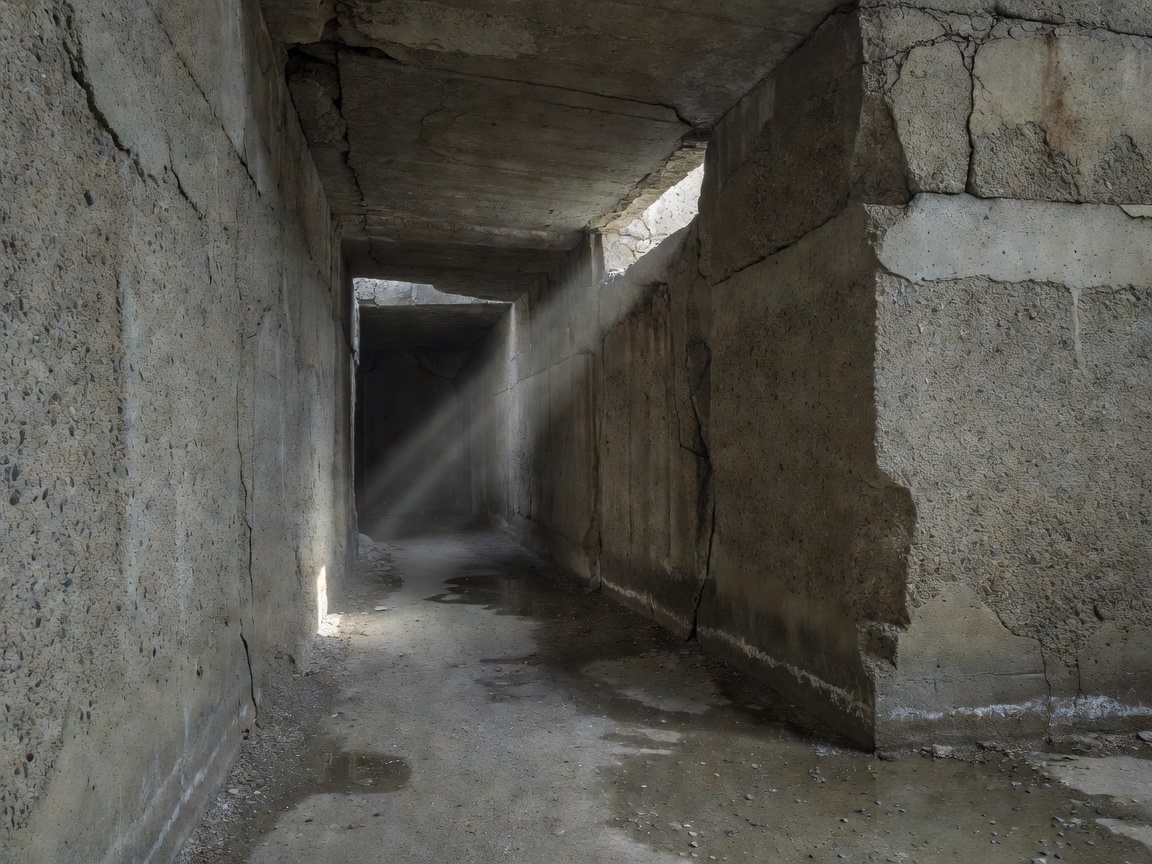
Terms matter
A bunker usually refers to a hardened shelter or military structure, but usage varies by period and language. A fortification is broader: it may include walls, ditches, galleries, towers, underground rooms, and landscape obstacles. Civil-defence spaces were designed for protection of populations or services, while military installations served operational systems.
How to read a defensive site
Position
Look at the relationship to roads, approaches, coastlines, borders, valleys, ports, or urban districts. Subterranean architecture gains meaning from what it controls or protects above ground.
Movement
Corridors, stairs, chambers, blast doors, and junctions manage people and equipment. Modern interpretation should not turn these arrangements into a game or suggest that restricted routes are available.
Material
Concrete thickness, masonry, steel, earth cover, and later repairs can indicate construction phases, but visual inference is not proof. Use archival or institutional sources for dates and purpose.
Context and memory
Defensive places can carry difficult histories. Interpretation may address displacement, occupation, civilian risk, labour, technological change, and post-war reuse. A restrained presentation is more useful than theatrical treatment.
Some sites remain sensitive, privately held, or structurally unsafe. Do not publish access instructions for closed structures. Do not cross barriers, enter shafts, or remove material.
Regional comparison
Good for
- Studying architecture within political geography.
- Comparing military and civilian protection functions.
- Considering preservation and difficult heritage interpretation.
What to know
Historic significance does not make a structure safe or publicly accessible. Consult official visitor information and respect every restriction.